
Meeting people in Edmonton’s LGBTQ+ community doesn’t take a big leap. It takes one small step, and there’s a version of that step for every comfort level. A potential interaction is any moment where connection could happen: a conversation at a community gathering, a shared table at a volunteer night, a friendly hello at a local event, even a message sent to a group before you ever show up in person. Some are loud and social. Others are quiet and low-pressure. All of them count.
Why does this matter? Connection is one of the most reliable sources of belonging, and belonging shapes how safe, supported, and visible people feel in the place they live. Newcomers often find their footing through a single welcoming face. Allies learn by listening to lived experience. Educators and activists build stronger work when it’s rooted in real relationships.
You’ll find these opportunities in community centres, arts spaces, volunteer groups, social clubs, campus organizations, and online communities that lead into in-person meetups. Some invite you to jump in. Others let you observe first, and that’s perfectly fine. You set the pace.
This article maps out where interactions tend to happen, offers practical tips for different comfort levels, and answers common questions. For current local events and ways to get involved, Edmonton Pride’s resources are the best place to start.
What We Mean by “Potential Interactions”
A potential interaction is any connection that could happen when people share a space, an event, or a cause. It might be a friendly hello at a gathering, a conversation that turns into a friendship, or a collaboration that grows into a long-term partnership. Most of them begin small, and none of them is too small to matter.
Interaction also isn’t one-size-fits-all. It’s a spectrum. Some people feel energized by a crowded celebration, while others prefer a quiet one-on-one chat or a way to help behind the scenes. There’s no single right way to participate, and every point on that spectrum counts.
That’s why this idea sits so close to Edmonton Pride’s mission of connection, acceptance, and unity. When people feel welcome to engage at their own pace, community grows from the ground up.
Here are a few terms we’ll use throughout this article:
- Potential interaction
- Any connection, conversation, or collaboration that could happen when people share a space, event, or cause.
- Opportunity for Interaction
- A specific setting or moment that turns a potential interaction into a real one, such as a gathering, workshop, or volunteer shift.
- Peer support
- Mutual encouragement and understanding shared between people with similar experiences.
- Allyship
- Ongoing, respectful action by people outside the LGBTQ+ community to listen, learn, and stand with it.
- Community space
- A physical or virtual place where people can gather, feel welcome, and connect with others.
Keep these definitions in mind as we look at why connection matters and where it tends to happen.
Why Connection Matters for Our Community

Connection is more than a nice extra. Every potential interaction carries real weight for how people feel and how communities function. When someone finds a place to be themselves, the benefits spread outward, and research shows that social support reduces loneliness and strengthens resilience.
Picture a newcomer who arrives in the city knowing no one. One friendly conversation at a community gathering leads to an invitation, then a first friend group, and soon the city feels like home. That is an illustration, not a single story, but it captures how a small moment can change someone’s sense of belonging. Connection is also a foundation for LGBTQ+ wellness because feeling seen and supported eases isolation and makes it easier to reach out for help when you need it.
Interaction builds knowledge, too. Imagine an ally who chats with a neighbour and learns what everyday life looks like from another perspective. Listening like that turns good intentions into real understanding. When people share what they know, they pass along practical information about rights, resources, and services, which helps everyone make informed choices about their own lives and the causes they support.
Collaboration is especially valuable for understanding LGBTQ+ rights and intersex issues. These topics are best learned from people who live them, and open conversation helps replace guesswork with respect. Intersex people, in particular, benefit when communities make space for their voices rather than speaking on their behalf.
Finally, connection builds collective empowerment. When people come together around shared goals, they can organize, advocate, and celebrate in ways no one could manage alone. Each interaction adds a little more strength to the whole community.
Where Interactions Happen: Opportunities for Interaction in Edmonton
Community Events and Gatherings
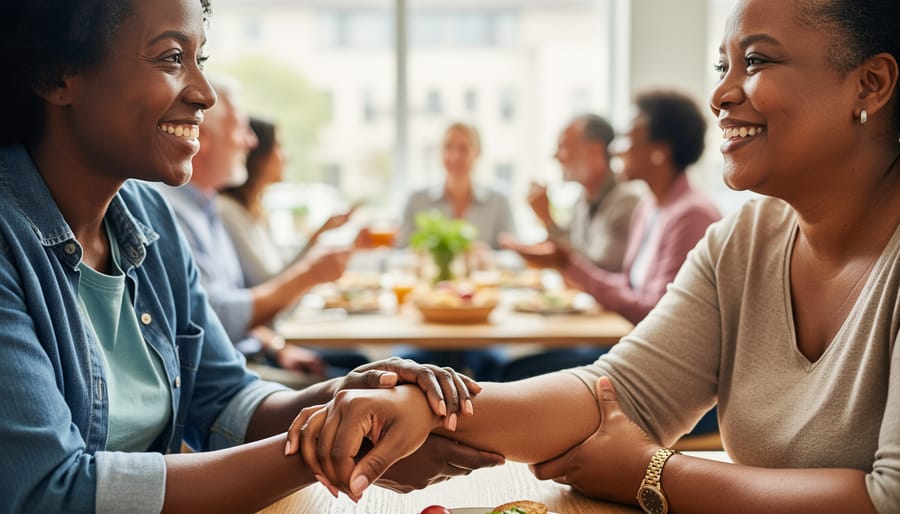
Pride celebrations, social meetups, and community-led gatherings are some of the easiest places to meet people, because everyone arrives with something in common. You don’t need a perfect opener. A shared moment, like a parade route, a craft table, or a coffee line, does the work for you.
These settings also let you choose your own pace. You can join a big, lively celebration or a smaller, quieter meetup where conversations come more slowly. Some people stay for ten minutes and leave with one friendly hello. Others stay all afternoon and walk away with a new circle of friends. Both count as real connection.
Gatherings like these can also help build stronger LGBTQ+ networks since each new face adds to the web of support, friendship, and shared knowledge that people lean on year-round.
Because plans and details change, the best way to find what’s coming up is to check the Edmonton Pride website for current listings. You’ll find up-to-date information on celebrations and community-led gatherings, so you can pick the ones that feel right for you.
Seasonal Moments and Notable Dates in LGBTQ+ History
Awareness days, remembrance observances, and history-focused dates give a community a shared reason to come together. Because they return each year, they offer natural openings for potential interactions, and you don’t need a big plan or a lot of experience to take part.
These occasions can be marked in many ways. Some people attend a gathering, while others join a quiet moment of remembrance or a conversation about how far LGBTQ+ rights have come and how much work remains. Intersex awareness observances, for example, create space to learn about experiences that often get overlooked, and to listen to the people living them.
What makes these dates useful for connection is that the purpose is already set. Everyone arrives with something in common, whether that’s honouring people we’ve lost, celebrating progress, or learning something new. That shared focus can make it easier to start a conversation, ask a thoughtful question, or simply sit beside someone who cares about the same things.
You can also mark them on your own terms. Reading about LGBTQ+ history, sharing what you’ve learned with a friend, or inviting a neighbour to join you are all valid ways to take part.
Learning, Advocacy, and Volunteer Spaces
Some of the strongest connections form when people show up for the same purpose. Learning, advocacy, and volunteer spaces give you something to do together, which takes the pressure off small talk and lets friendships grow out of shared work.
Workshops and educational sessions are a good place to begin. They invite curiosity, and nobody expects you to arrive as an expert. Educators can swap ideas about building inclusive classrooms, and conversations about the value of transgender teachers show how representation shapes the places where young people learn. Allies can come to listen, ask respectful questions, and find out how to be useful.
Advocacy work connects people around change they care about. That might mean learning about LGBTQ+ rights, supporting policy conversations, or helping raise awareness of intersex issues, which are often misunderstood and deserve more attention. These spaces welcome people who want to learn the basics as much as seasoned activists.
Volunteering is another easy way in. Every event and community project depends on people willing to help, and working side by side on a task builds trust quickly. You can choose a role that suits your comfort level, whether that’s greeting guests, sharing information, or supporting behind the scenes.
If you’re looking for ongoing connection, support groups offer a steady, welcoming place to share experiences and build lasting relationships.
Wherever you start, you bring something valuable. Check Edmonton Pride’s resources for current opportunities to learn, advocate, and volunteer.
Making the Most of Every Potential Interaction

Not every potential interaction needs to become a deep friendship, and that’s perfectly fine. What matters is finding a pace that feels right for you. Some people thrive in a crowded room, while others do better with a quiet conversation at the edge of one. Both are valid ways to take part.
If you’re feeling nervous or you’re new to the community, a simple sequence can make a first event feel manageable:
- Choose a setting that feels comfortable. A small social gathering, a daytime event, or a learning session may suit you better than a big celebration, and that’s okay.
- Bring a friend if it helps. Having someone beside you can make walking through the door much easier, and you can always branch out once you settle in.
- Start with a simple introduction. Share your name and, if you like, the pronouns you use. A friendly “Hi, I’m new here” opens more doors than you might expect.
- Listen and ask respectful questions. Curiosity about someone’s interests or what brought them to the event goes a long way. Skip anything that probes into personal history.
- Follow up with new connections. If you’ve exchanged contact details with someone, a quick message afterward turns a pleasant chat into the start of a real connection.
A few ground rules keep every interaction welcoming. Consent matters in conversation, too, so check in before taking photos, sharing stories, or asking for contact details. Privacy deserves the same care. Someone’s name, orientation, or gender identity is theirs to share, so never out or speculate about another person. Let people describe themselves in their own words, and use the names and pronouns they give you. If you make a mistake, a quick apology and a correction is all that’s needed.
Allies can make a real difference by listening first. You don’t need to have all the answers or take the lead. Show up with an open mind, let community members guide the conversation, and be willing to learn from what you hear. Respect the space by following the lead of organizers, and remember that your presence is most valuable when it supports others rather than centres you.
Small, genuine gestures add up. Over time, they build the trust that turns a potential interaction into a lasting connection.
Common Questions About Getting Involved
Do I need to be out to take part?
No. Showing up doesn’t require you to share anything about your identity. Plenty of people attend, volunteer, or join conversations without telling anyone more than their first name. You decide what you share, when, and with whom, and a welcoming community respects that.
How can allies participate respectfully?
Start by listening. Come curious, follow the lead of LGBTQ+ people, and remember the space exists for the community first. Use the names and pronouns people give you, ask before assuming, and be ready to learn from a correction without getting defensive. Showing up consistently often matters more than any single grand gesture.
What if I feel anxious about going?
That’s very common, and you’re not alone. It can help to bring a friend, arrive early while things are quieter, or begin with a lower-key gathering before a bigger one. Give yourself permission to leave when you’ve had enough. Even a short visit counts as a real step.
How do I find current opportunities?
Event details, volunteer needs, and community resources change over time, so the most reliable place to look is Edmonton Pride. Check their website and social channels for what’s happening now, and reach out directly if you have questions or aren’t sure where to begin. Asking is welcome, and there’s no wrong way to start.
Every shared space holds potential interactions. The coffee line before a community event, the volunteer table, the workshop where someone asks a question you were too shy to ask yourself. None of these moments needs to be big to matter. A hello can grow into a friendship, a friendship into a support network, and a support network into the kind of community where more people feel safe being themselves.
That growth happens each time someone chooses to take part. You don’t have to be the loudest voice in the room or have all the answers. You only need to show up in the way that feels right for you today, and let that be enough.
So take the next step. Explore Edmonton Pride’s resources and upcoming events, reach out with a question, or simply say yes to one opportunity. Your presence helps build the connection and acceptance that make this community strong, and there is a place here for you.